
Rush County Probate Court Jurisdiction
Probate in Rush County belongs to the District Court. Kansas district courts have general jurisdiction, so the same local trial court that handles civil, criminal, domestic, traffic, and small-claims matters also handles estates and fiduciary proceedings. Rush County does not have a separate surrogate court, orphans' court, or stand-alone probate courthouse. Requests should route to Rush County District Court when the record is a probate case file, letters, order, inventory, accounting, or decree.
Probate records may include wills, codicils, petitions for administration, orders admitting a will, letters testamentary, letters of administration, creditor notices, claims, inventories, valuations, accountings, sale orders, final settlements, decrees of descent, guardianship reports, and conservatorship orders. Some of those records are ordinary estate filings. Others are restricted because they concern minors, protected adults, medical facts, or confidential identifiers.
Rush County District Court
715 Elm Street / PO Box 387
La Crosse, KS 67548
785-222-2718
Fax: 785-222-2748
Hours listed by Kansas courts: 8 a.m. to noon and 1 p.m. to 5 p.m.
Rush County Probate Terms
Probate filings use terms that are easy to mix up. These definitions keep the record search focused on the right document and the right person. A probate estate for a decedent is different from a guardianship for a person who needs personal care decisions or a conservatorship for property management.
- Testator
- A person who made a will before death.
- Executor
- The person named in a will to carry out estate duties after appointment by the court.
- Administrator
- A person appointed to manage an estate when there is no executor serving.
- Intestate
- Dying without a valid will, so Kansas succession law controls distribution.
- Guardianship
- A court case about personal care, custody, or decisions for a minor or adult needing protection.
- Conservatorship
- A court case about managing money or property for a protected person.
Search Rush County Probate Records
Start with Kansas CaseSearch when looking for a public probate case number, filing date, case type, party name, or event entry. Then use the Clerk of the District Court for documents that are not online, for older files, or for certified copies. Probate data may be public while a specific image or filing is not available online. Guardianship and conservatorship matters can be limited for privacy reasons.
- Search by decedent, ward, conservatee, petitioner, or case number in Kansas CaseSearch if the case is public.
- Confirm the county and court before using a result, because Kansas CaseSearch covers district courts statewide.
- Review docket events for petitions, orders, letters, notices, claims, inventories, accountings, and final decrees.
- Contact Rush County District Court if the document image is missing, the file is older, or a certified copy is needed.
- For estate real property, check whether the Rush County Register of Deeds has a related deed, lien, power of attorney, or recorded transfer.
| Field | Use | Notes |
|---|---|---|
| Case number | Direct lookup | Best if known from a notice, order, or attorney letter. |
| Decedent or ward name | Name search | Use full legal name and spelling variants. |
| Case type | Filter | Probate, estate, guardianship, or conservatorship. |
| Filing date range | Narrow results | Helpful for older estates or common names. |
| County | Confirm venue | Verify Rush County before requesting copies. |
Rush County Small Estate Affidavit
Kansas small-estate law can avoid a full probate appointment for some personal property. K.S.A. 59-1507b allows certain successors to use an affidavit when a Kansas resident dies and the total assets of the estate subject to probate do not exceed the statutory threshold. The research captured the current threshold as $75,000. This does not mean every estate under that amount is simple, and it does not solve every real estate or disputed-claim issue.
The Kansas small-estate affidavit statute is the manifest source for the small-estate probate image.
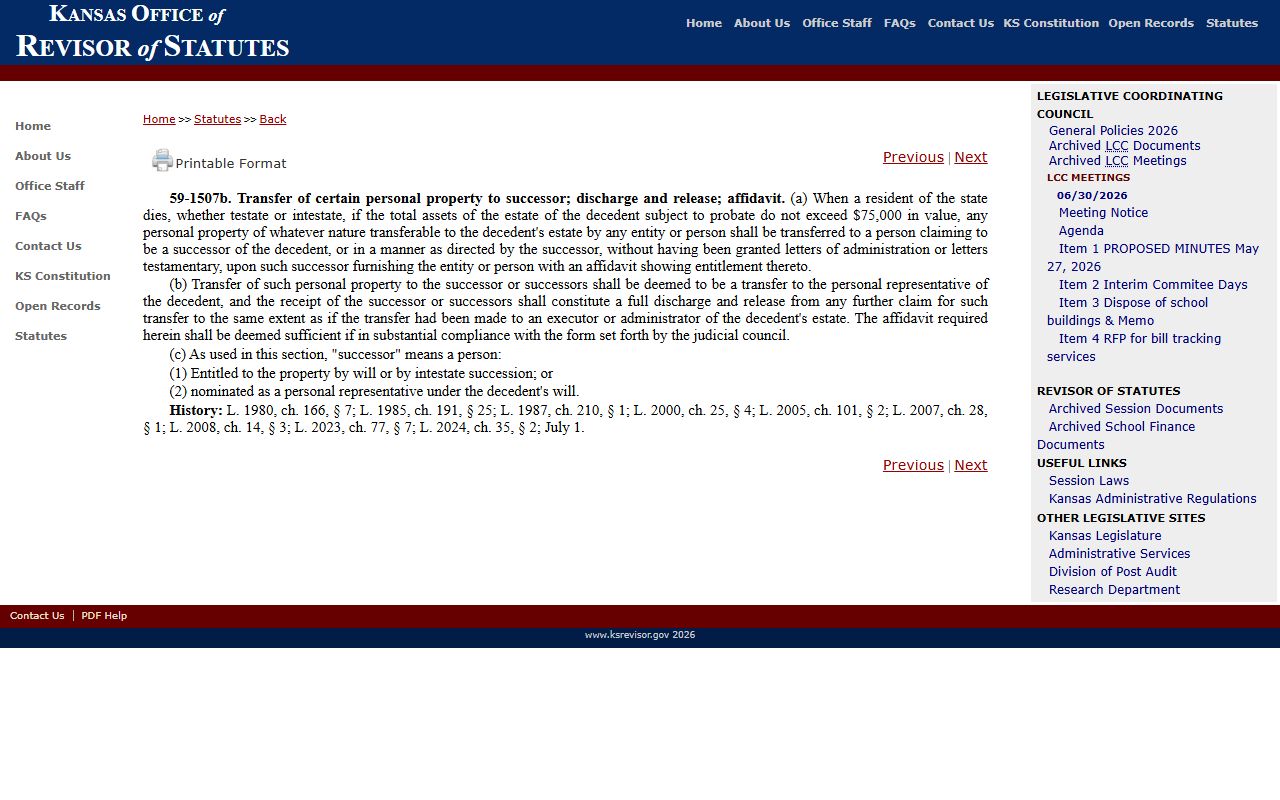
The statute is useful for Rush County probate questions because it helps separate a full estate case from a limited personal-property transfer.
A successor is a person entitled to the property by will or intestate succession, or a person nominated as personal representative under the will. If the estate involves land, a fight over heirs, creditor claims, or a need for court authority, the District Court or legal counsel may still be needed. The Register of Deeds may hold related land instruments, but that office records documents and is not responsible for researching missed documents.
Rush County Probate Filing Fees
The research did not locate a Rush County-specific probate fee sheet or certified-copy schedule. The statewide Kansas Self-Help fee page is the current official starting point for filing fees, and the local District Court should be used before mailing money for probate copies, certified letters, or estate filings. A poverty affidavit may be available for people who cannot pay qualifying court costs.
| Item | Amount or source note |
|---|---|
| Probate filing fee | Use the current Kansas Self-Help fees page; amount not captured in research. |
| Certified letters testamentary or administration | Rush County-specific fee not located; ask District Court. |
| Certified probate copy | Rush County-specific fee not located; ask District Court. |
| Small-estate affidavit | May avoid full probate letters for qualifying personal property, but costs can still apply. |
| Fee waiver request | Kansas filing guidance allows a poverty affidavit request with court papers. |
Note: Do not send payment for probate copies until the clerk confirms the file, fee, and delivery method.
What Rush County Probate Records Show
A public estate record can show the case number, filing date, court, decedent name, petitioner, personal representative, attorney, judge or magistrate, and docket entries. Common events include petition filed, will lodged, hearing set, order admitting will, letters issued, creditor notice, inventory, claim, sale request, accounting, final settlement, and decree. Documents may be online only where eCourt and Kansas court rules permit access.
| Field | What it can show |
|---|---|
| Case number | The district court identifier used for requests and certified copies. |
| Estate or decedent name | The person or estate connected to the probate filing. |
| Fiduciary | Executor, administrator, guardian, conservator, or petitioner if public. |
| Docket entries | Chronological filings, notices, hearings, orders, and closure events. |
| Documents | Images or filings when public and available through eCourt rules. |
| Restrictions | Sealed, guardianship, conservatorship, juvenile, or confidential material may be withheld. |
Restricted Rush County Probate Records
Estate records are often more open than guardianship or conservatorship records. Kansas public portal guidance flags guardianship and conservatorship case types as not available to ordinary public portal users. Juvenile-related records also have special limits under Kansas law. A docket may exist, yet the public may not be able to see the same details that a party, attorney, agency, or court-authorized person can see.
The Kansas family law code index was assigned in the probate manifest set because family and probate issues can overlap in guardianship, parentage, and protected-person contexts.
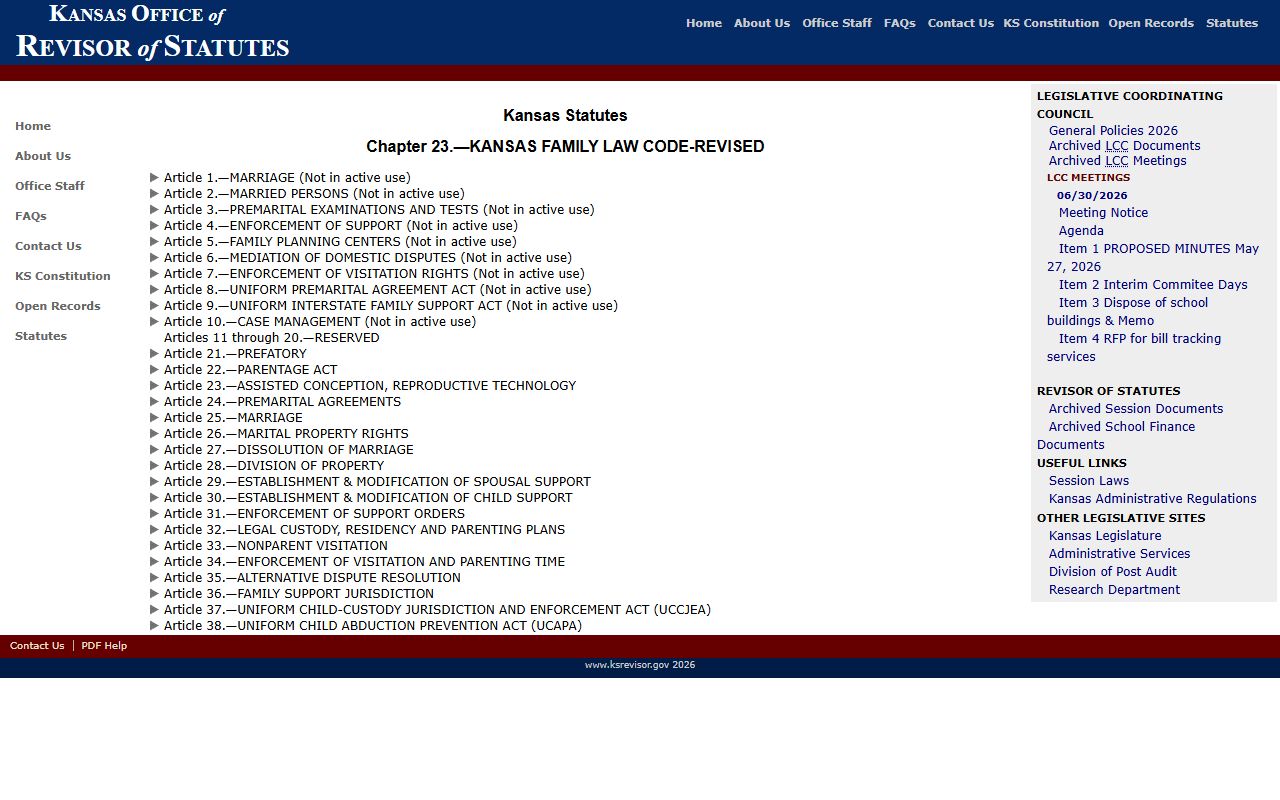
Family-law links do not turn a guardianship into a divorce case, but they explain why some probate-adjacent records are treated with more care.
The Kansas juvenile code index is another assigned source for probate record limits involving minors.
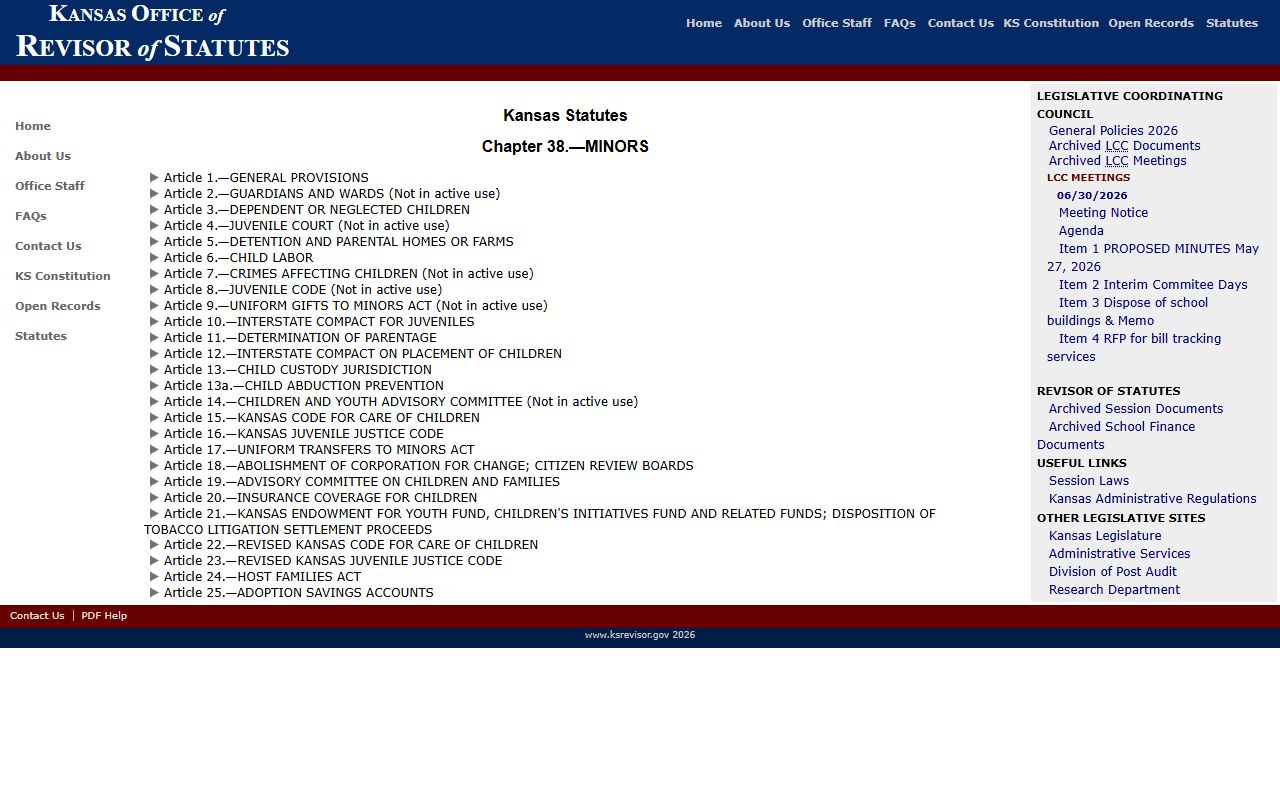
Minor guardianship and juvenile-linked matters should be checked with the clerk before assuming public online access exists.
Rush County Estate Land Records
Probate and land records can meet when a decedent owned Rush County real estate. The court file may show authority to sell, distribute, or account for estate property. The Register of Deeds may hold deeds, mortgages, liens, platted additions, powers of attorney, and related instruments. Rush County Register of Deeds records date back to the 1800s, according to the official county page, but the office states that registers of deeds are recorders, not researchers.
If the probate question involves federal custody or a missing heir in federal prison, the assigned manifest also included the Federal Bureau of Prisons locations page.
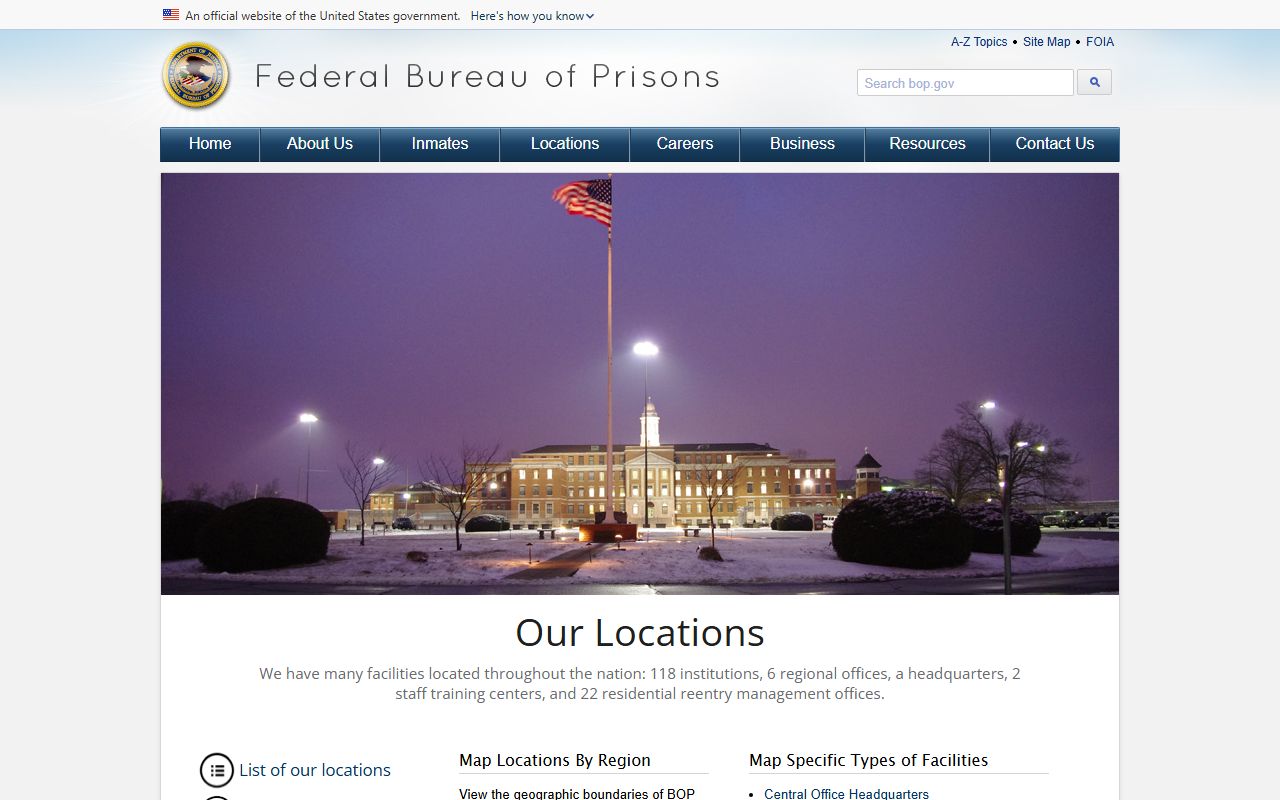
That source is not a Rush County probate database, but it may help estate representatives locate a federally held interested person.