
Rush County Criminal Case Files
A criminal court record begins once a prosecution is filed with Rush County District Court. The case file is maintained by the Clerk of the District Court and records what the court does with the allegation. It is broader than a booking entry. It can include the complaint or information, probable-cause material when public, warrant returns after execution, bond orders, docket events, motions, journal entries, plea records, sentencing orders, probation conditions, fines, fees, restitution, and final disposition.
Rush County is in the 24th Judicial District. Kansas district courts are the trial courts with general original jurisdiction, so they hear felony prosecutions and state-law misdemeanor cases filed by the County Attorney. Municipal courts may handle city ordinance violations and many city traffic matters. Federal criminal cases from Kansas are separate and use the U.S. District Court for the District of Kansas, not the county district court.
The charge detail itself is easier to compare on the Rush County arrest records and court charges page. The criminal court record is the full case-level file and outcome.
Search Rush County Criminal Court Records
Public Rush County criminal court records are searched through Kansas CaseSearch when the case is public and available online. Search by case number when possible. If a booking report, citation, or notice uses a number that does not match the court format, search by defendant name and confirm county, case type, filing date, and status before relying on the match.
- Open CaseSearch and search by case number, defendant name, or another available criterion.
- Confirm the result is a Rush County District Court criminal case.
- Read the docket entries for filing, bond, appearance, plea, motion, hearing, disposition, and sentence events.
- Compare each charge count to the disposition because dismissed or amended counts may remain visible.
- Contact the Clerk of the District Court for certified copies or documents that do not display online.
A Kansas Bureau of Investigation criminal history check is different. The Kansas.gov criminal history search is a fee-based statewide repository search and is not a Rush County case file. It may help with statewide background context, but it does not replace the docket and filed documents for a specific prosecution.
Rush County Criminal Case Flow
Criminal court records are easiest to read in order. The County Attorney decides what charges to prosecute after law enforcement refers a report or arrest. The court case then moves through first appearance or arraignment, bond and pretrial settings, motions, plea negotiation or trial, disposition, sentencing, and later compliance or probation events.
Case flow: Charges Filed › Arraignment › Pretrial / Motions › Plea or Trial › Disposition › Sentencing
| Stage | What Happens |
|---|---|
| Charges Filed | The complaint or information creates the formal criminal case and lists the charge counts. |
| Arraignment | The defendant appears, the charges are addressed, and a plea may be entered. |
| Pretrial / Motions | The docket may show hearings, continuances, discovery disputes, suppression motions, bond changes, or diversion activity. |
| Plea or Trial | The record may show a guilty plea, not guilty verdict, guilty verdict, dismissal, or other disposition. |
| Sentencing | The court enters jail or prison terms, probation, fines, costs, restitution, and other conditions when applicable. |
What Rush County Criminal Records Show
Criminal case fields should be read with care because one arrest can lead to several counts, and each count can have a different result. A case may contain a filed charge, amended charge, dismissed count, conviction count, sentence, and financial obligation. CaseSearch may also show expanded financial details where public.
| Field | What It Shows |
|---|---|
| Case Number | The Kansas court identifier for the Rush County criminal case. |
| Defendant | The person charged, subject to redaction or restriction in confidential matters. |
| Charges | Count number, statute number, charge text, severity or class, offense date, and amended or dismissed status where shown. |
| Attorneys | County Attorney, defense counsel, appointed counsel, or other attorney entries when public. |
| Bond / Warrant Events | Bond orders, warrant returns, bench warrant entries, recalls, or appearance conditions when public. |
| Plea and Disposition | Guilty, not guilty, dismissed, diverted, acquitted, convicted, transferred, appealed, or another case result. |
| Sentence | Jail, prison, probation, restitution, fines, fees, costs, payment schedule, and supervision conditions. |
Rush County Attorney Role
The Rush County Attorney is the local prosecuting authority for state-law criminal cases filed in Rush County District Court. The official county attorney page lists Tony W. Rues, office address at 111 W 3rd St, PO Box 780, La Crosse, phone 785-222-3736, fax 785-222-3735, and email trues@rushcountykansas.gov. That office is where charging decisions, victim information, bad check prosecution, and prosecution-related questions are routed.
The Rush County Attorney page is the local source for prosecutor contact information and links to district court, the 24th Judicial District, Kansas Bar Association, and Kansas Legal Services.
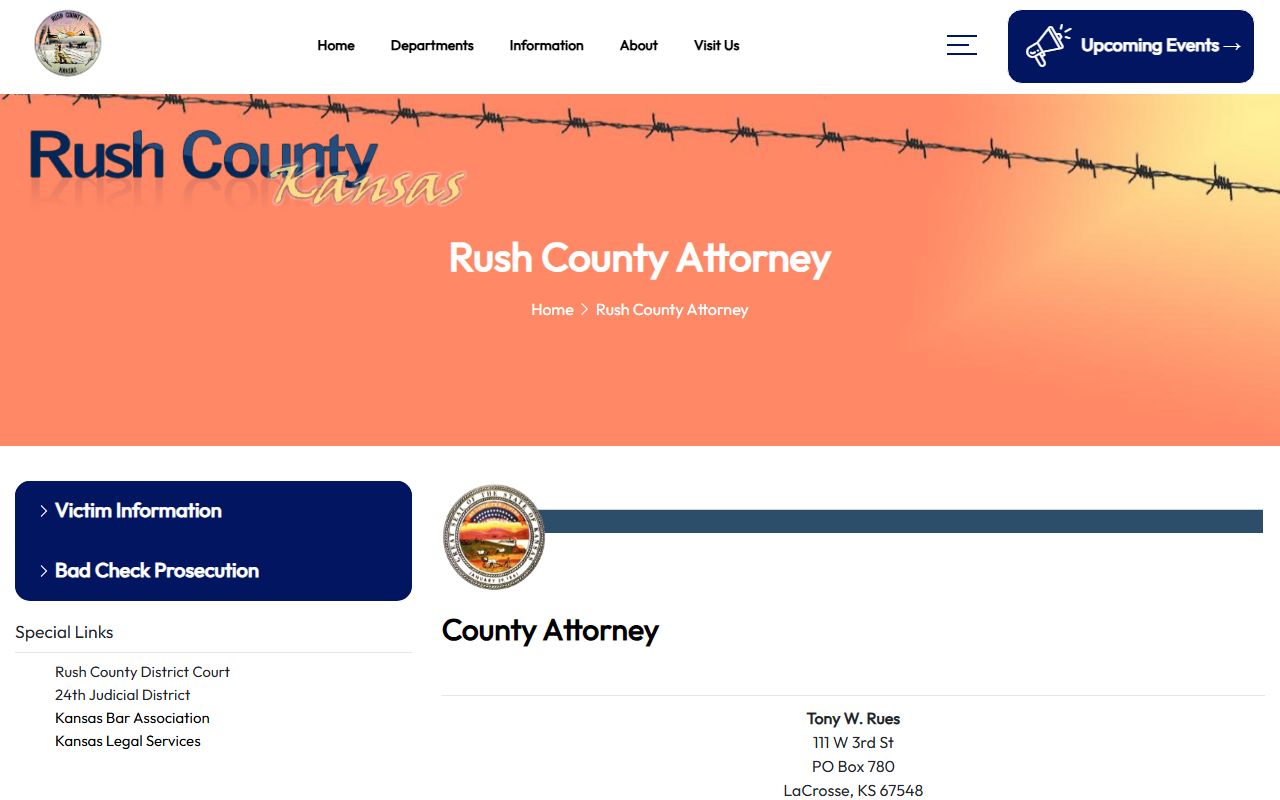
That office context explains why an arresting officer's booking charge can differ from the formal count filed in the criminal court case.
Charges vs Convictions
A charge is an accusation filed or pursued in the case. A conviction is the result of a guilty plea, guilty verdict, or other conviction event. A Rush County criminal court record can show charges that were reduced, amended, dismissed, or resolved through a plea to a different count. Do not read the charge list as a conviction list without checking disposition and sentence entries.
| Charge | Conviction | |
|---|---|---|
| Meaning | An allegation or count filed in court | A final guilty result on a count |
| Timing | Appears early and can change | Appears after plea, verdict, or judgment |
| Record Reading | Check amended, dismissed, and pending status | Check sentence, probation, fines, and appeal activity |
Sealed vs Expunged Records
Sealed records are closed by law or court order. Expungement is a Kansas court process that limits public access to eligible criminal records. K.S.A. 21-6614 addresses expungement of certain convictions, arrest records, and diversion agreements after waiting periods and completion of required terms. Juvenile, sealed, protection, and other confidential matters have separate restrictions.
| Sealed | Expunged | |
|---|---|---|
| Public View | Not available to ordinary public users | Limited after a successful court process |
| How It Happens | By statute, rule, or court order | By petition and court approval when eligible |
| Where to Ask | Clerk of the District Court | The convicting or filing court under Kansas law |
The Kansas expungement statute is a key source for eligibility and procedure.
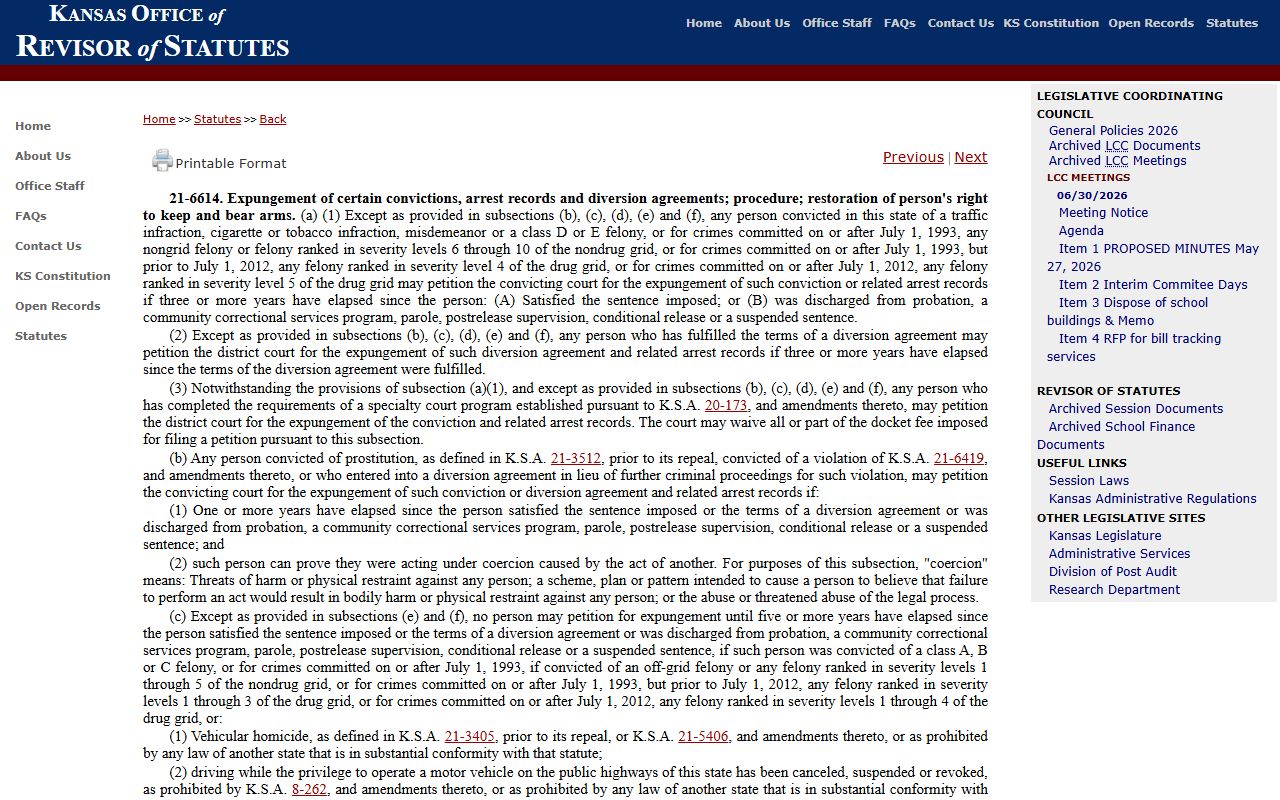
Expungement language should be checked against the actual charge, disposition, and sentence before any assumption is made.
Public Access to Criminal Records
Public access to Rush County criminal court records depends on Kansas court rules, KORA principles, and specific confidentiality rules. Kansas Supreme Court Rule 106 controls court-record access, while Rule 108 addresses reproduction and disposition. K.S.A. 45-221 includes exemptions for sensitive law-enforcement and personal records, and K.S.A. 45-411 recognizes that judicial records are governed by Supreme Court rules.
For criminal history beyond a single court case, Kansas.gov and KBI maintain the criminal history record check. The source advertises a $30 Kansas.gov purchase price and a daily maintenance window from midnight to 4 a.m. Central.
The Kansas criminal history record check is a statewide background source, not the Rush County court file.
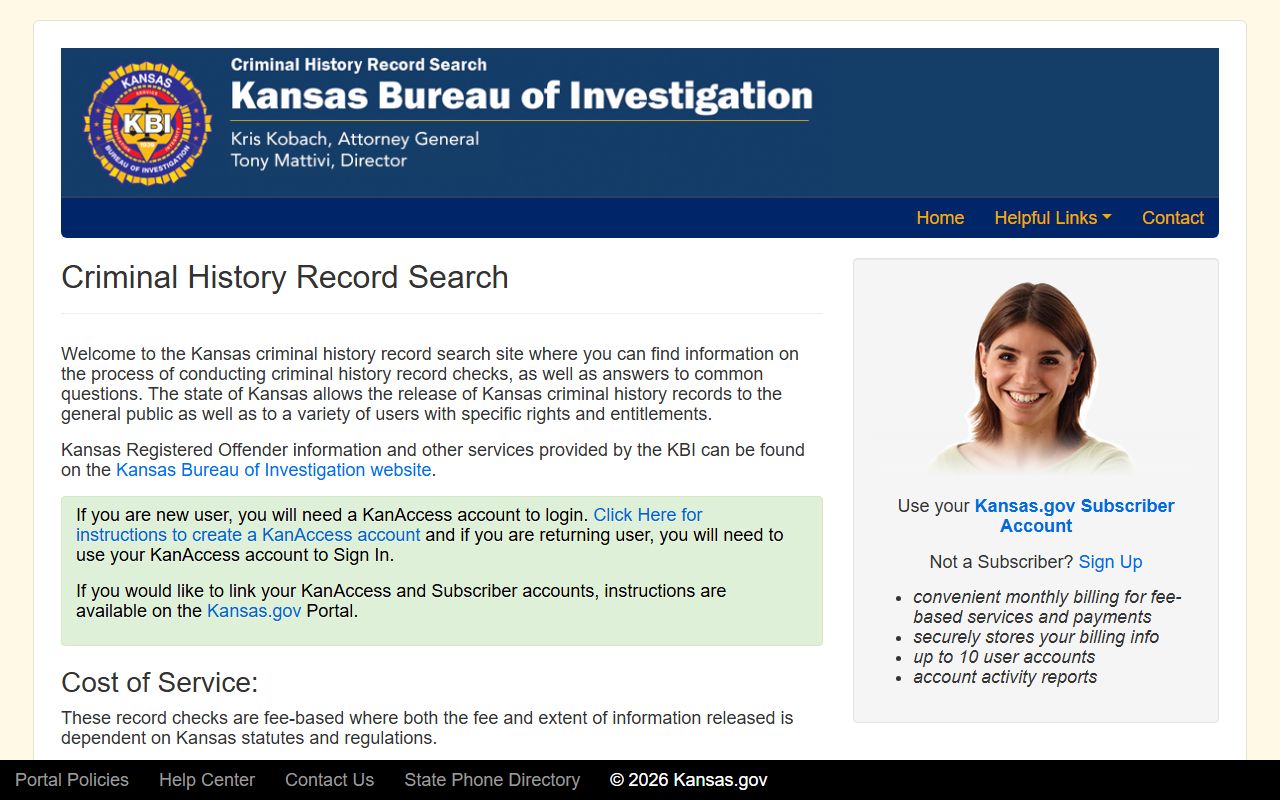
Use the court file for the case-level record and the KBI search for statewide repository history when that is the needed record type.
Federal Criminal Records Are Separate
Federal criminal cases from Kansas are not filed with the Rush County District Court. They use the U.S. District Court for the District of Kansas and PACER. The District of Kansas has divisional offices in Kansas City, Topeka, and Wichita, and public terminals are available at those federal courthouses during published hours.
The U.S. Attorney's Office for the District of Kansas handles federal prosecutions in the district.
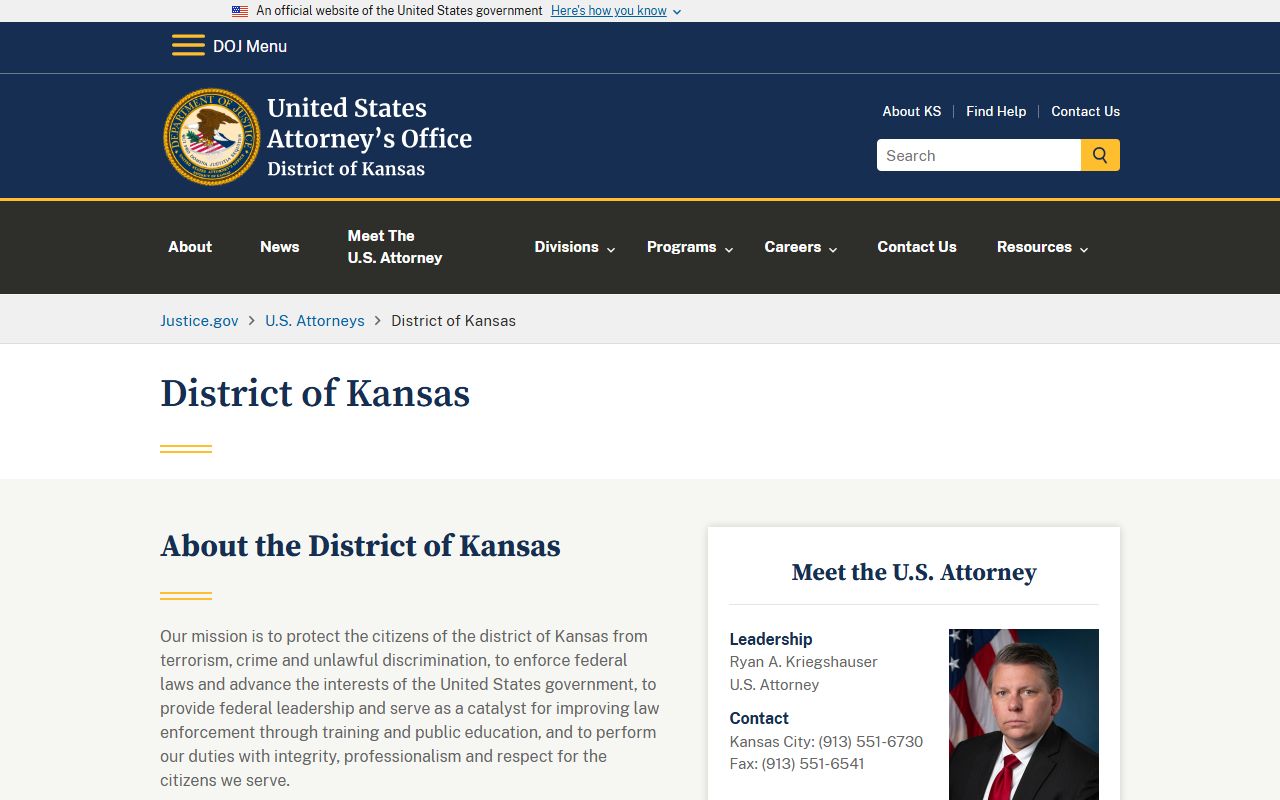
A federal charge may involve Rush County conduct, but its docket and documents remain outside the county district court system.
The U.S. Attorney Kansas contact page gives federal office contact information for the district.
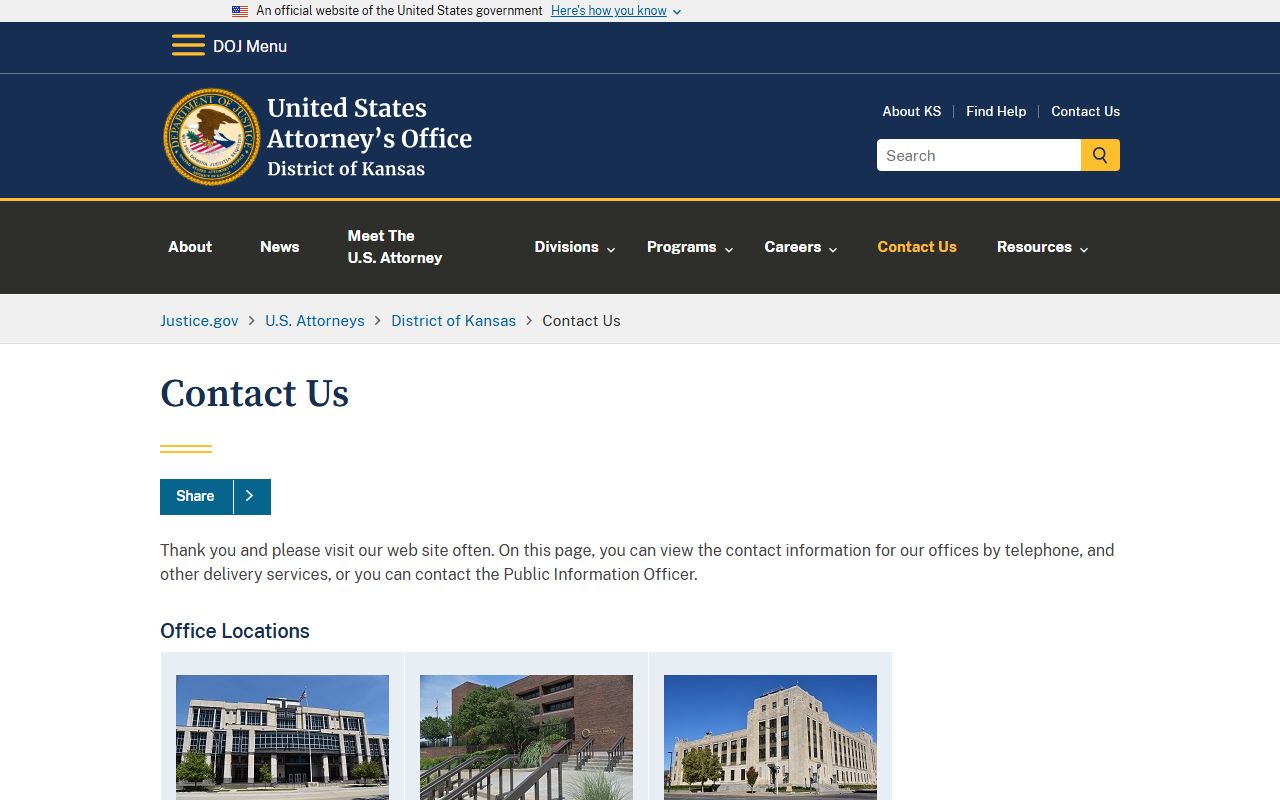
Federal contacts should not be used for routine Rush County state criminal cases prosecuted by the County Attorney.
The PACER District of Kansas lookup is the official federal docket route.
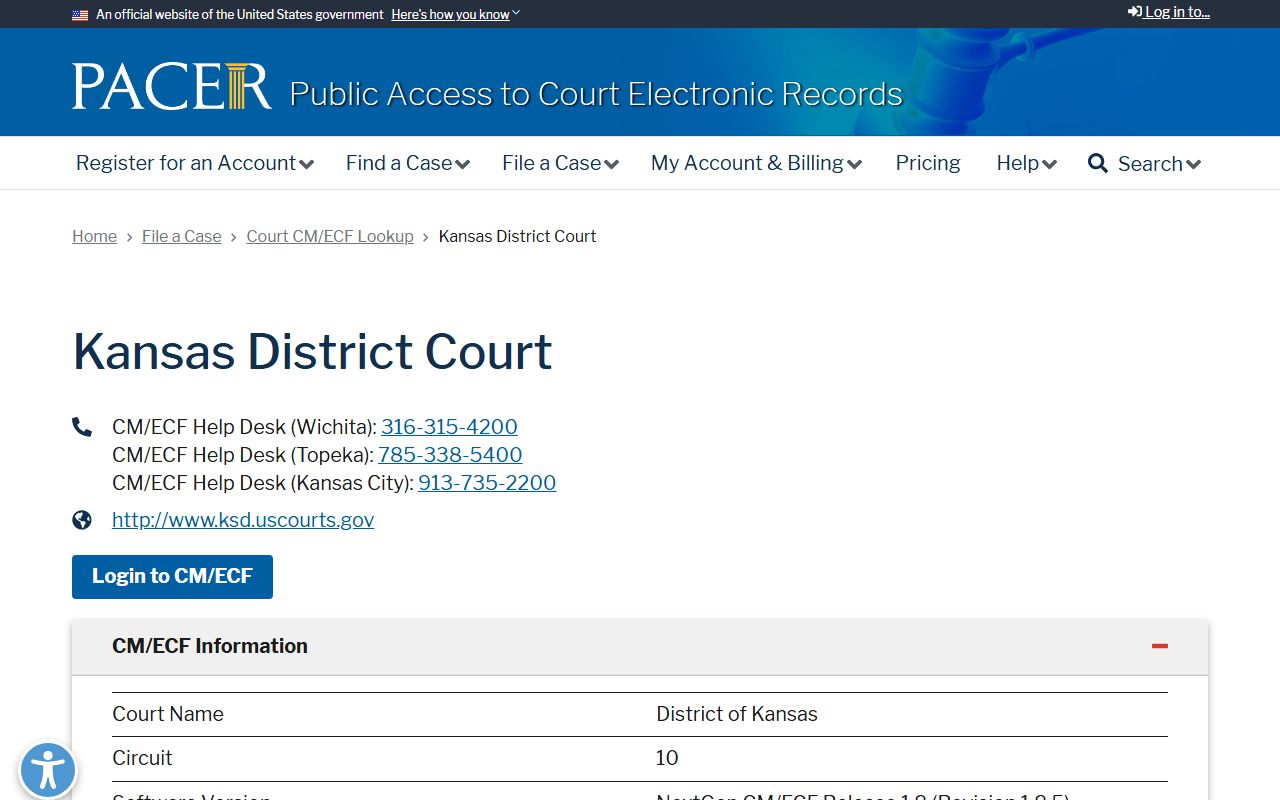
PACER searches federal cases by party, case number, and other federal docket criteria rather than Rush County CaseSearch fields.
Restricted Rush County Criminal Records
Juvenile offender records, child-in-need-of-care records, sealed warrants, expunged arrest records, grand jury material, confidential victim information, and sealed filings are not ordinary public criminal court records. Public portal limits also mean that some case types and documents may not display even though a court file exists.
Defendants who cannot afford counsel should ask Rush County District Court at first appearance or arraignment about appointed counsel and any required financial affidavit. No separate Rush County public defender office was located in official county sources. Victims should contact the County Attorney for victim information, restitution questions, hearing information, and prosecution matters handled by that office.